
Pond Muck Treatment vs. Dredging
Several inches of soft material along a shoreline does not automatically mean a pond needs dredging. At the same time, a pond that has lost a substantial amount of depth may not be restored by adding a monthly muck-treatment product.
Pond muck treatment, mechanical removal, pond cleaning, and dredging address different conditions. The right approach depends on what has accumulated, how deep and widespread it is, how the pond is used, whether fish are present, what access is available, and what the property owner wants to accomplish.
AquaPond helps pond owners throughout Northwest Ohio and Southeast Michigan evaluate bottom buildup, muck, odor, poor circulation, vegetation, and related pond conditions. Most professional projects begin with a Pond Analysis Visit to assess the pond’s condition before recommending a treatment or service.
Treatment, Removal or Dredging?
These terms are sometimes used interchangeably, but they do not describe the same work.
Pond Cleaning
Purpose: Remove leaves, debris, dead vegetation and address general maintenance.
Best considered when debris, dirty edges, clogged equipment, or localized organic material are the main concerns.
Muck Treatment
Purpose: Gradually manage primarily organic bottom material.
May be considered when the buildup is organic, manageable, and suitable for a treatment-based approach.
Mechanical Muck Removal
Purpose: Physically remove accessible bottom material.
May make sense when buildup is localized, directly accessible, or too substantial for treatment alone.
Dredging
Purpose: Remove a large volume of accumulated sediment and restore depth or capacity.
May be considered when substantial mineral sediment, widespread depth loss, or major restoration needs are present.
These categories can overlap. A neglected pond may need debris removal, equipment maintenance, muck management, and improved circulation. A pond with major sediment accumulation may require a dedicated dredging or excavation project rather than routine pond maintenance.
What Is Pond Muck?
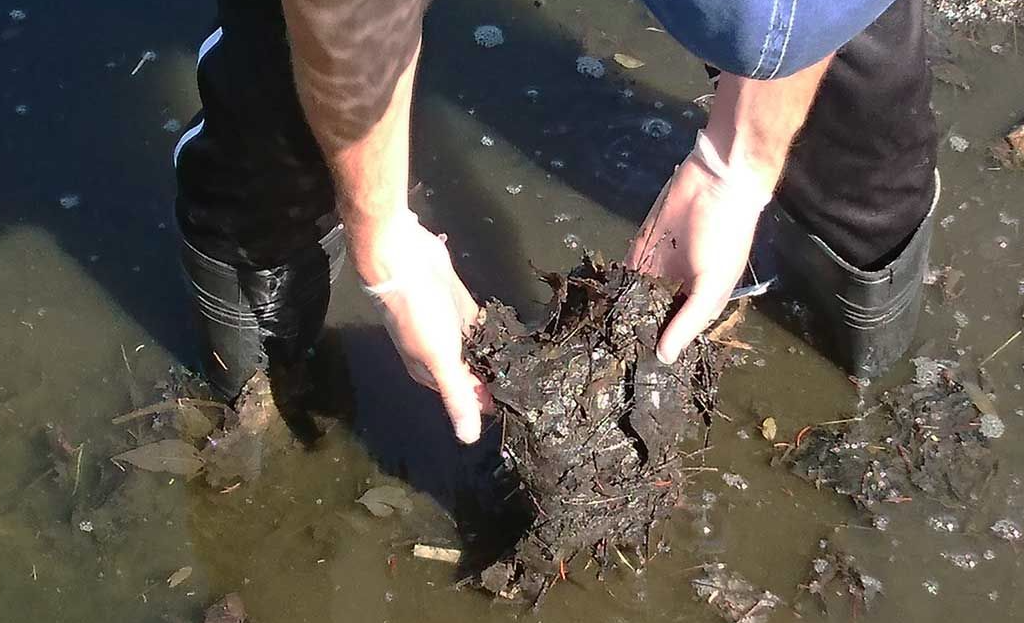
Pond muck is usually a soft mixture of decomposing organic material that has settled along the bottom.
As this material breaks down, it can form a dark, soft, or sticky layer. Excessive organic buildup may contribute to odors, cloudy water, shallow shorelines, and recurring maintenance problems.
Not Everything on the Pond Bottom Is Muck
Organic Muck
Organic muck is primarily made from leaves, plants, algae, fish waste and other decomposable material.
It is often dark, soft, or spongy and may collect near shorelines, in coves, or beneath trees.
Sludge
“Sludge” is a broad term that may refer to soft organic muck, fine sediment or a mixture of both. Calling material “sludge” does not specify exactly what it is or how it should be managed.
Soil and Mineral Sediment
Soil, sand, silt and clay can enter a pond through runoff, shoreline erosion, drainage channels and disturbed ground. This material is generally denser or grittier than organic muck.
Eroded Material
Failing banks, upstream drainage, construction activity, farm fields, and stormwater inlets can deposit mineral material that cannot be broken down as easily as leaves or algae.
Why Does Muck Accumulate?
Some bottom accumulation is normal. Problems arise when material enters the pond faster than it can reasonably be broken down or removed through routine maintenance.
The source of the buildup matters. Treating the pond bottom without addressing heavy leaf input, erosion, runoff, or recurring vegetation may allow the problem to return.
For larger acreage ponds, see AquaPond’s farm pond management services.

What Is Pond Muck Treatment?
Muck treatment generally refers to the application of a pond-management product intended to support the gradual breakdown of organic material. Depending on the product, this may involve bacterial or other microbial formulations designed to address organic buildup on the bottom.
Muck treatment is not an instant excavation process. It does not physically scoop material out of the pond, and it should not be presented as a product that will quickly remove all types or depths of buildup.
Results May Depend On:
When Muck Treatment May Be Considered
- Material is primarily organic.
- Buildup is thin or manageable.
- Problem is localized.
- Gradual improvement is acceptable.
- Pond conditions fit the selected product.
- Minimal physical disturbance is preferred.
What Muck Treatment Cannot Do
- Remove sand, clay, or gravel.
- Correct major shoreline erosion.
- Restore several feet of lost depth quickly.
- Remove large branches or trash.
- Repair pond structures.
- Replace dredging when major mineral sediment must be removed.
Pond-management products should always be selected and applied according to the current product label and the conditions of the individual pond.
What Is Mechanical Muck Removal?
Mechanical muck removal means physically removing material from the pond rather than relying entirely on gradual treatment.
Depending on the pond, this can involve removing leaves and dead vegetation, cleaning shoreline areas, removing accessible bottom debris, extracting soft material, or cleaning an ornamental pond or water garden.
The exact method depends on pond type, depth, access, fish, plants, equipment, water level and disposal options.
Mechanical Removal Is Not Automatically Dredging
Cleaning an ornamental pond, removing shoreline muck or extracting a localized pocket of soft material is not necessarily the same as dredging an entire pond.
Learn more about professional pond cleaning and cleanouts.

What Is Pond Dredging?
Dredging is a larger sediment-removal project used to remove a substantial volume of accumulated material from a pond, lake, retention basin or other water body.
Its purpose may include:
Mechanical Dredging
Mechanical dredging generally uses excavation equipment to remove material directly. Depending on the project, water levels may need to be lowered, and heavy equipment may be used from shore or within the basin.
Hydraulic Dredging
Hydraulic dredging uses pumping equipment to move sediment as a slurry to another area where water and solids can be managed or separated.
Is Dredging Bad for a Pond?
Dredging is neither automatically good nor automatically bad. It is a major physical project that can disturb the pond, require heavy equipment, and create a large amount of material that must be managed.
It may nevertheless be appropriate when a pond has lost substantial depth, accumulated dense mineral sediment, developed large sediment deposits near inflows, or reached a condition that routine treatment cannot correct.
Does this pond contain enough widespread sediment or lost depth to justify a dredging project?
When Each Option May Be Appropriate
Muck Treatment
Best considered when material is primarily organic, buildup is manageable, gradual improvement is acceptable, and lower physical disturbance is preferred.
Mechanical Removal
May be appropriate for heavy leaves, dead vegetation, localized shoreline buildup, ornamental pond cleanouts, or accessible soft material.
Dredging or Excavation
May need to be evaluated when the pond has major depth loss, dense mineral sediment, widespread accumulation, or large-scale restoration goals.
Dredging May Require Regulatory Review
Dredging is not simply a larger version of routine pond cleaning. Depending on the water body, location, connection to other waters, and handling of removed material, federal, state, or local authorization may be required.
Property owners considering a major dredging or excavation project should verify current requirements before work begins. This article provides general information and is not a permit determination.
Can Aeration Help With Pond Muck?
Aeration may be part of a broader muck-management plan because circulation and oxygen can affect pond conditions and the activity of microorganisms involved in organic decomposition.
Aeration may be useful when a pond also has:
Aeration does not physically remove sand, clay, or mineral sediment and should not be presented as a guaranteed replacement for dredging.
What About Pond Cleaning?
Pond cleaning may be the appropriate choice when the main problem is debris, dead vegetation, dirty edges, equipment issues or localized soft material rather than widespread bottom sediment.
Cleaning, muck treatment, and aeration may also be combined. A pond might need leaves removed, equipment cleaned, organic bottom material evaluated, circulation improved, and an ongoing maintenance plan established.
What Affects the Recommendation?
A photograph of dark bottom material is helpful, but it is rarely enough to choose the complete solution.
A Practical Way to Think About the Decision
Soft organic matter or dense, gritty mineral sediment?
One shoreline, a cove, or throughout the pond?
An unpleasant layer or substantial loss of usable depth?
Less odor, cleaner shoreline, better access or restored depth?
Preventing Muck and Sediment From Returning
No removal method permanently prevents new material from entering the pond.
How AquaPond Evaluates Pond-Bottom Buildup
Tell Us What You Are Seeing
Share your city, pond size, approximate depth, use, buildup location, photos, and equipment information.
Schedule a Pond Analysis Visit
AquaPond evaluates the shoreline, visible buildup, access, vegetation, circulation, and equipment.
Review the Recommendation
The plan may include cleaning, muck treatment, aeration, vegetation management, mechanical removal, or further sediment evaluation.
Decide How to Proceed
If you approve the recommended AquaPond service, the Pond Analysis Visit fee is applied as a credit toward the work.
Pond Muck Treatment and Dredging FAQs
Can bacteria remove all the muck from a pond?
How can I tell whether the bottom is organic muck or soil?
Will aeration remove pond muck?
Is dredging always the best way to remove muck?
Can pond cleaning replace dredging?
How long does pond muck treatment take?
Can AquaPond help determine whether dredging is necessary?
Not Sure What Is Accumulating in Your Pond?
Soft organic muck, shoreline debris and heavy mineral sediment require different solutions. AquaPond can inspect the pond, evaluate the buildup and recommend the most practical next step based on the pond’s size, depth, access, use and long-term goals.
Prefer to call? 419-699-2567