
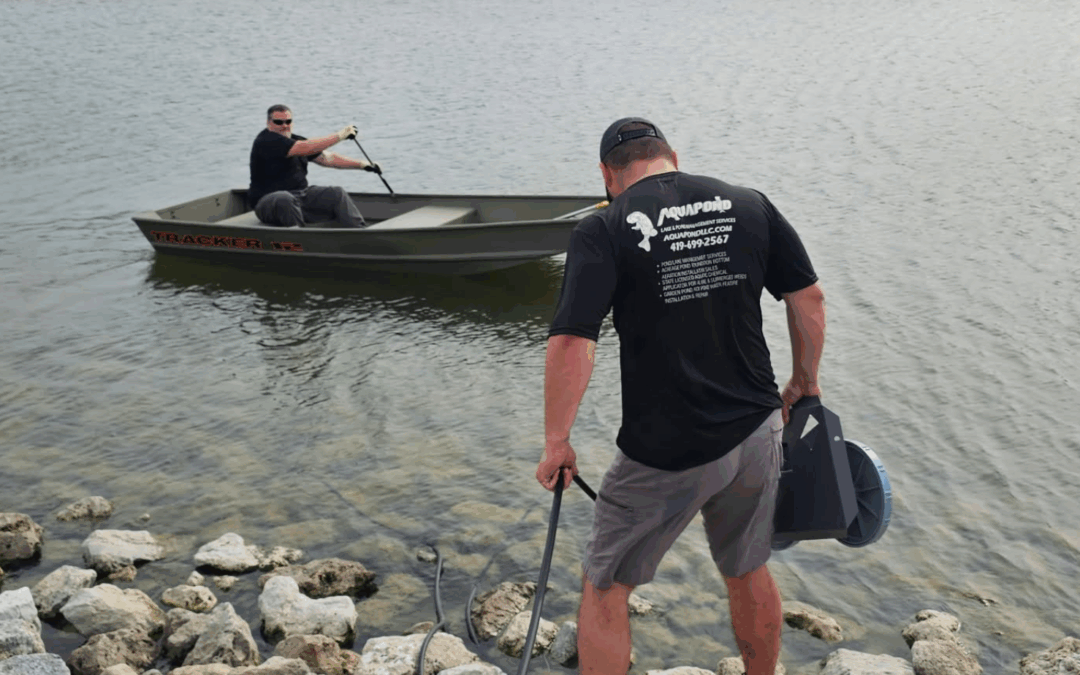
Professional Pond Cleaning Services
Professional pond cleaning is not one identical service performed the same way on every pond.
A backyard koi pond in Sylvania, a farm pond near Bowling Green, and a commercial retention pond in Perrysburg may all look dirty or neglected, but they can require very different kinds of work. One pond may need leaves, dead vegetation, and clogged equipment cleaned out. Another may need muck management, aeration or a broader restoration plan instead of a traditional cleanout.
AquaPond evaluates the pond before recommending how much cleaning is appropriate. Pond type, size, depth, fish, plants, equipment, shoreline access, and the type of material present all affect what the project may include.
Jump to a Section
What Does Professional Pond Cleaning Mean?
Pond cleaning is a broad term. It can describe anything from removing accumulated leaves and cleaning a clogged filter to completing a more involved ornamental-pond cleanout.
On larger ponds, cleaning may focus on shorelines, debris, vegetation, equipment and accessible problem areas rather than emptying the entire pond.
Professional pond cleaning should begin by determining what is causing the pond to look or function poorly. Cloudy water, odor, algae, dead vegetation, bottom muck and equipment problems can overlap, but they do not always require the same solution.
A pond that looks dirty may actually have:
A Cleanout Is Not Automatically the First Step
Completely draining and scrubbing a pond is not appropriate for every situation. AquaPond evaluates the pond before deciding whether it needs routine maintenance, targeted cleaning, muck management, equipment service, aeration, or a larger restoration plan.
What May Be Included in Professional Pond Cleaning?
The final scope should be based on the individual pond. Depending on its condition and the approved services, professional cleaning may involve several tasks.
Initial Pond Inspection
Review debris, water clarity, vegetation, bottom buildup, fish concerns, equipment, shoreline conditions, and access.
Surface-Debris Removal
Remove accessible leaves, branches, grass clippings, and other debris before more material settles to the bottom.
Dead-Vegetation Removal
Remove loose or dead aquatic plants where appropriate so they do not continue decomposing in the pond.
Shoreline Cleanup
Clear accessible edges of leaves, dead plants, trash, and other material affecting appearance or access.
Pump and Filter Maintenance
Inspect and clean pumps, filters, skimmers, intake screens and related equipment when included in the system.
Fountain or Waterfall Inspection
Inspect fountain intakes, pumps, nozzles, waterfalls and circulation components for blockages or reduced flow.
Bottom-Buildup Assessment
Evaluate soft muck, settled leaves, sludge and sediment to determine whether cleaning, treatment or removal may be appropriate.
Partial Drain-Down
Certain ornamental ponds may be lowered to improve access to equipment, edges or accumulated debris.
Full Ornamental-Pond Cleanout
A complete drain-down may be considered for some smaller ornamental ponds when the condition and approved scope justify it.
Equipment Restart
When the water level has been lowered, approved work may include refilling and checking pumps, filters, and other equipment to verify normal operation.
Maintenance Recommendations
The next step may include aeration, vegetation management, muck reduction, equipment service, or seasonal maintenance.
AquaPond’s pond-cleaning work is tailored to the property and pond. View pond cleaning and cleanout services →
Northwest Ohio Conditions
Why Ohio Ponds Need Different Cleaning Plans
Northwest Ohio ponds experience major seasonal changes. Spring thaw and storms can move branches and soil into the water. Summer heat can expose circulation or equipment problems. Fall brings concentrated leaf drop, and winter can damage plumbing, fountains, and pond edges.
A small Toledo backyard pond beneath mature trees may quickly collect leaves. A rural farm pond outside Bowling Green may receive soil and organic material through runoff. An HOA pond in Perrysburg may need fountain, shoreline, and inlet maintenance rather than a complete drain-down.
Signs a Pond May Need Professional Cleaning
One symptom does not always mean a full cleanout is needed. Several related symptoms, however, may justify a closer evaluation.
Material is collecting faster than routine maintenance can remove it.
Soft or sludgy material is accumulating on the pond bottom or along the shoreline.
The pond remains swampy or musty after obvious surface debris has been removed.
Water has become cloudy, dark, or discolored and the cause is unclear.
Pumps, filters, skimmers or fountains repeatedly clog or lose flow.
Dead algae or aquatic plants remain in the water and continue decomposing.
Shoreline areas have become shallower or less usable due to accumulated material.
Growth repeatedly returns, and dead material continues to accumulate on the pond bottom.
Cleaning Is Not a Complete Diagnosis
Rapid fish loss, severe surface gulping, a sewage-like odor, suspected runoff, major erosion or sudden water loss may require a different kind of evaluation. Removing debris does not automatically correct the underlying problem.
Does Every Pond Need to Be Drained for Cleaning?
No. Draining is one possible part of certain pond-cleaning projects, not a requirement for every pond.
Small Ornamental Ponds
A controlled partial or complete drain-down may be considered when a smaller ornamental pond contains heavy settled debris, neglected equipment or conditions that cannot be addressed effectively while the pond remains full.
Koi and Goldfish Ponds
Fish ponds require additional planning. Cleaning may focus on filters, skimmers, edges and accessible debris, or a more involved cleanout may be recommended. Fish safety and stable water conditions should be considered before major water removal.
View fish pond maintenance services →
Farm and Acreage Ponds
Larger farm and fishing ponds are generally not treated like backyard ornamental ponds. Cleaning may focus on shorelines, vegetation, debris, accessible muck, and ongoing management rather than draining the entire water body.
HOA and Retention Ponds
Retention and stormwater ponds may require inspection of inlets, outlets, banks, fountains, aeration, and accumulated sediment. Major sediment removal is a different project from ordinary pond cleaning.
Fish and Plant Considerations
What Happens to Fish and Aquatic Plants During Cleaning?
There is no single fish-handling procedure that is appropriate for every cleaning project.
The plan depends on:
Some projects can be completed without moving fish. More extensive ornamental pond cleanouts may require a separate fish and plant plan before work begins.
Pond Cleaning, Muck Management or Dredging?
These services can overlap, but they solve different kinds of problems.
Pond Cleaning
Removes accessible debris, cleans equipment, and addresses neglected or localized areas.
Muck Management
Focuses on soft organic material accumulated along the pond bottom or shoreline.
Mechanical Removal
Physically removes accessible or concentrated material when treatment alone may not be appropriate.
Dredging
A larger sediment-removal project used when substantial depth or pond capacity must be restored.
Learn more about pond muck removal and management.
What to Expect
What Happens During a Professional Pond-Cleaning Project?
Share the location, approximate size, pond type, visible problems, fish, equipment, and photographs.
The Pond Analysis Visit reviews debris, vegetation, muck, water clarity, fish concerns, equipment, access, and shoreline conditions.
AquaPond explains whether targeted cleaning, equipment service, muck management, aeration or another approach is appropriate.
The project may include debris removal, shoreline cleaning, equipment maintenance or accessible bottom cleaning.
Recommendations may include leaf control, aeration, muck reduction, vegetation management or scheduled service.
What Affects the Cost of Pond Cleaning?
Pond-cleaning prices cannot be determined accurately from the phrase “small pond” or from one close-up photo. Two similarly sized ponds can require very different amounts of labor, equipment, and planning.
Most professional service projects begin with a paid Pond Analysis Visit. If you approve the recommended AquaPond service, the visit fee is applied as a credit toward the work.
How Often Should a Pond Be Professionally Cleaned?
There is no universal cleaning schedule. Frequency depends on how quickly debris enters the water and how well routine maintenance prevents it from accumulating.
Important factors include:
Ornamental Fish Ponds
Smaller ornamental ponds may need regular maintenance of the filter, skimmer, and debris, with more involved cleaning when ordinary upkeep is no longer enough.
Farm and Fishing Ponds
Larger ponds are usually managed through shoreline cleanup, vegetation control, aeration, muck management and other targeted work rather than frequent full cleanouts.
Fountains and Water Gardens
These features often require more frequent attention to the pump, nozzle, filter, and debris because reduced flow can quickly affect appearance and operation.
What Is the Best Time to Clean a Pond in Ohio?
Spring and fall are common times for pond-cleaning work, but the right timing depends on weather, water temperature, fish, plants and the actual problem.
Spring
Remove winter debris, inspect equipment, and prepare for warmer weather while accounting for temperature swings in Northwest Ohio.
Summer
Targeted debris removal and equipment service may be appropriate, but more disruptive work should account for warm water and fish oxygen demand.
Fall
Remove leaves and dying vegetation before winter, while avoiding a major cleanup too early in the leaf-drop season.
Winter
Major cleaning is usually more difficult because of ice, cold water, and frozen ground. Winter work often focuses on equipment and planning.

What Pond Cleaning Does Not Automatically Fix
Cleaning can improve appearance, remove debris and restore equipment performance, but it should not be presented as a permanent cure for every pond problem.
- Leaks: Cleaning does not repair damaged liners, pipes or structural water-loss problems.
- Recurring algae: Growth may return when nutrients, sunlight, runoff or circulation issues remain.
- Major depth loss: Routine cleaning does not replace dredging when substantial mineral sediment is present.
- Shoreline erosion: Material may return if the source of eroded soil is not corrected.
- Fish disease: Cleaning cannot diagnose every cause of fish illness or mortality.
- Poor equipment sizing: Cleaning an undersized pump or filter does not make it appropriate for the pond.
How to Reduce Future Pond-Cleaning Needs
Cleaning addresses material already in the pond. Prevention focuses on slowing how quickly new material accumulates.
Professional Pond Cleaning FAQs
What does a professional pond cleaning include?
Does pond cleaning always require draining the pond?
What happens to fish during pond cleaning?
Can cleaning help with algae or pond odor?
What is the difference between pond cleaning and muck removal?
Is pond cleaning the same as dredging?
How much does pond cleaning cost?
Does AquaPond provide pond cleaning near Toledo?
Pond Cleaning in Northwest Ohio
Not Sure What Kind of Cleaning Your Pond Needs?
Leaves, bottom muck, algae, odor, poor circulation, and equipment problems can make a pond look neglected, but they do not always require the same service. AquaPond can inspect the pond and recommend the most practical next step.
Most professional service projects begin with a paid Pond Analysis Visit. If you approve the recommended AquaPond service, the visit fee is applied as a credit toward the work.